

FCA Consultations for the evolving Asset Management Framework and beyond: What firms should pay attention to now
FCA Consultations and the importance of them
The FCA’s consultation package signals a significant evolution of the UK’s post-Brexit asset management framework. Taken together, the proposals aim to create a regime that is more proportionate, easier to navigate and better aligned with firms’ size, activities and risks.
The reforms are likely to affect the following firms:
UK AIFMs;
Third-country AIFMs marketing AIFs in the UK under the NPPR;
Residual Collective Investment Scheme (CIS) operators;
UK UCITS management companies;
In-scope MIFIDPRU investment firms;
Depositaries, delegates and fund administrators; and
Regulatory-reporting, technology and data providers.
The package comprises three consultations:
CP26/28: The UK AIFM Regime;
CP26/26: Fund Reporting for Asset Management Entities (FRAME); and
CP26/27: Remuneration reform for solo regulated firms.
The reforms through these consultations focus on five key themes:
Greater proportionality: a move away from the current binary distinction between small and full-scope UK AIFMs towards a more graduated framework reflecting firms’ size, activities, complexity and potential impact.
A simpler rulebook: a proposed new Alternative Investment Funds sourcebook (‘ALTS’), bringing relevant AIFM requirements together within a more coherent part of the FCA Handbook.
Modernised fund reporting: FRAME would introduce a broader and more standardised approach to fund level reporting across AIFs and certain non-AIF collective investment schemes.
Increasing UK–EU divergence: the UK is not implementing AIFMD II and is instead developing a distinct domestic framework tailored to the UK market.
Competitiveness alongside robust standards: the proposals seek to support growth and reduce unnecessary regulatory burden while maintaining effective governance, risk management, investor protection and market integrity.
In the following sections, we summarise the key proposals across the FCA’s three consultation papers, what firms should do now and highlight important timelines.
Consultations summary
CP26/28: A more proportionate UK AIFM regime
The FCA has proposed the following:
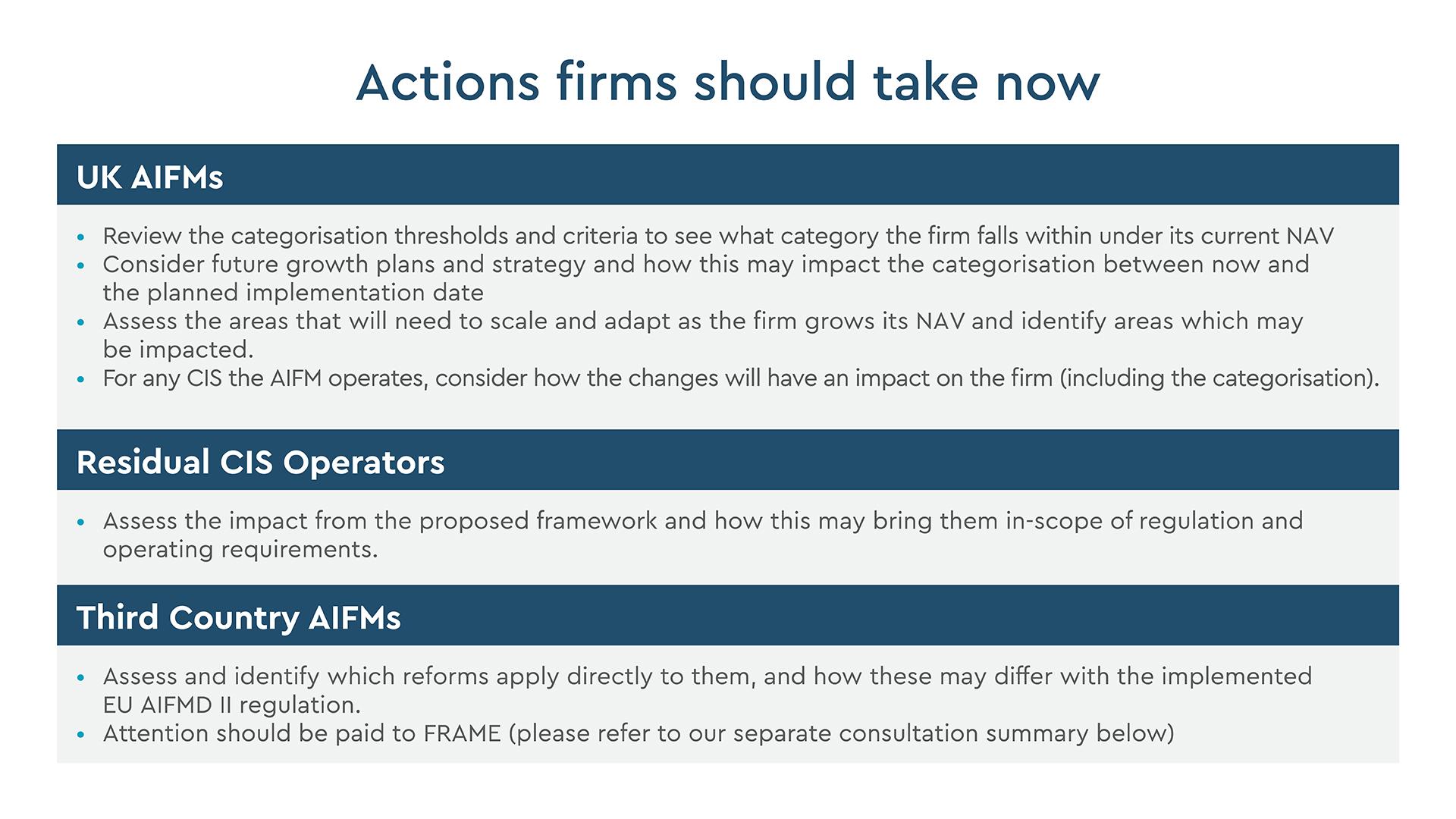
Replacing the current distinction between small and full-scope UK AIFMs based on an AUM threshold, with small, medium and large categories based on NAV. The proposed NAV thresholds are up to £750 million (Small), £750 million to £5 billion (Medium), and over £5 billion (Large) respectively.
Applying core requirements across UK AIFMs, with additional requirements increasing according to firms’ size, activities, complexity and potential impact;
Introducing the new ALTS sourcebook;
Applying requirements relating to governance, operations, risk and liquidity management, delegation, valuation, conflicts, leverage and investor disclosures more proportionately; and
Allowing firms moving between proposed size categories generally to notify the FCA rather than apply for a variation of permission or requirements.
In addition to the above, the FCA is also seeking views on the future prudential framework, including:
capital and own-funds requirements;
fixed overhead requirements;
professional-negligence risks;
liquidity and financial resilience;
wind-down planning; and
group risk and prudential consolidation.
These prudential considerations remain at an earlier stage of policy development, with more detailed proposals expected through further consultation.
Image
CP26/26: FRAME and the future of fund reporting
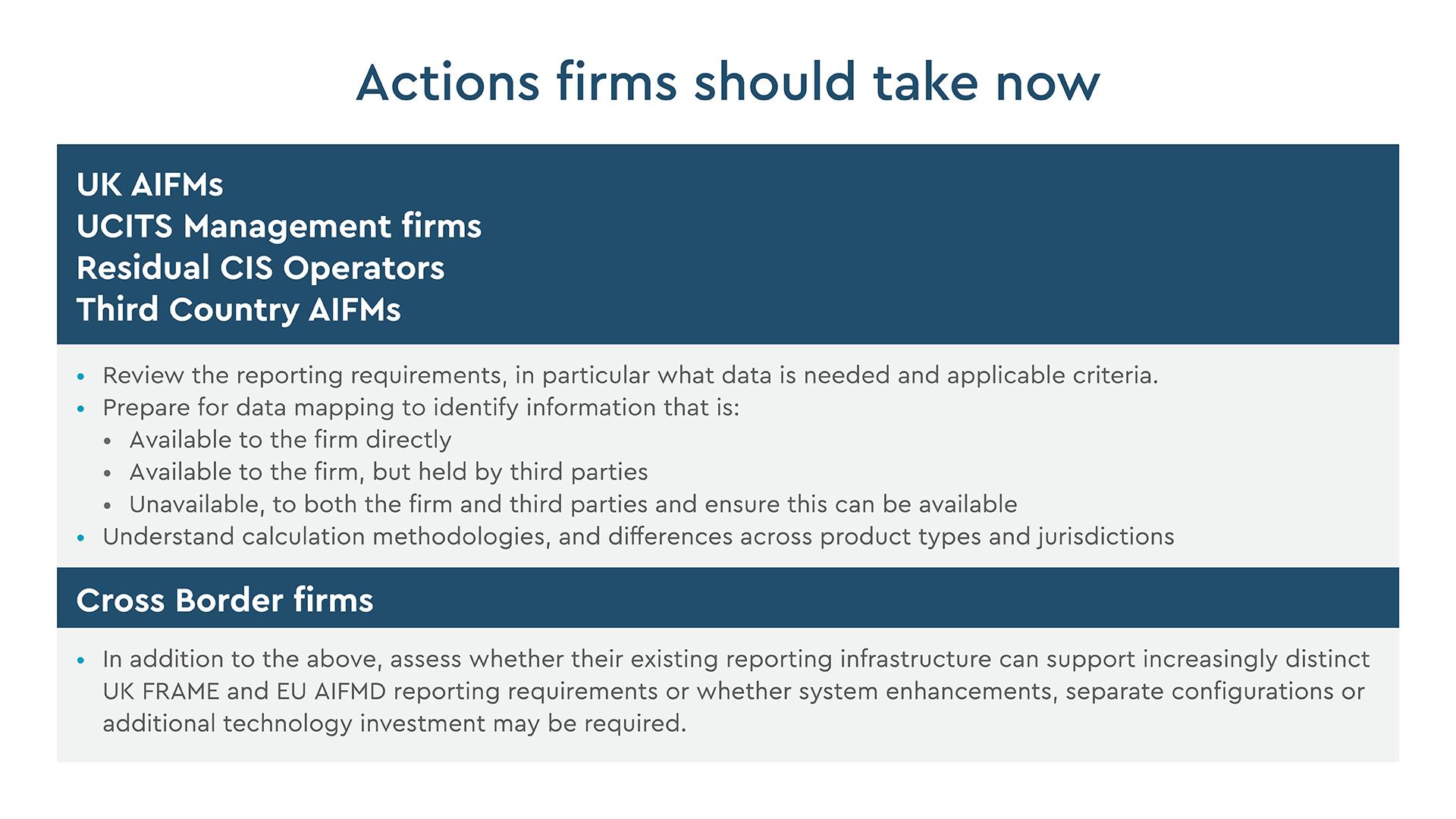
FRAME is broader than a reform of either Annex IV or existing UK UCITS reporting. It is intended to bring reporting across a wider range of authorised and unauthorised funds within a more coherent and standardised framework, combining common reporting requirements with additional data requirements and reporting frequencies tailored to different fund types, characteristics and risks.
Key proposals include:
A common reporting framework with requirements tailored to different fund types, characteristics and risks;
Reporting across AIFs and certain non-AIF collective investment schemes, including UK UCITS and Non-UCITS Retail Schemes (‘NURS’);
More consistent and comparable fund level information;
Additional reporting intended to address gaps in the FCA’s current reporting;
Reporting frequencies reflecting different fund types and characteristics; and
New reporting forms and further prototypes for industry testing.
Image
CP26/27: Remuneration reform beyond AIFMs
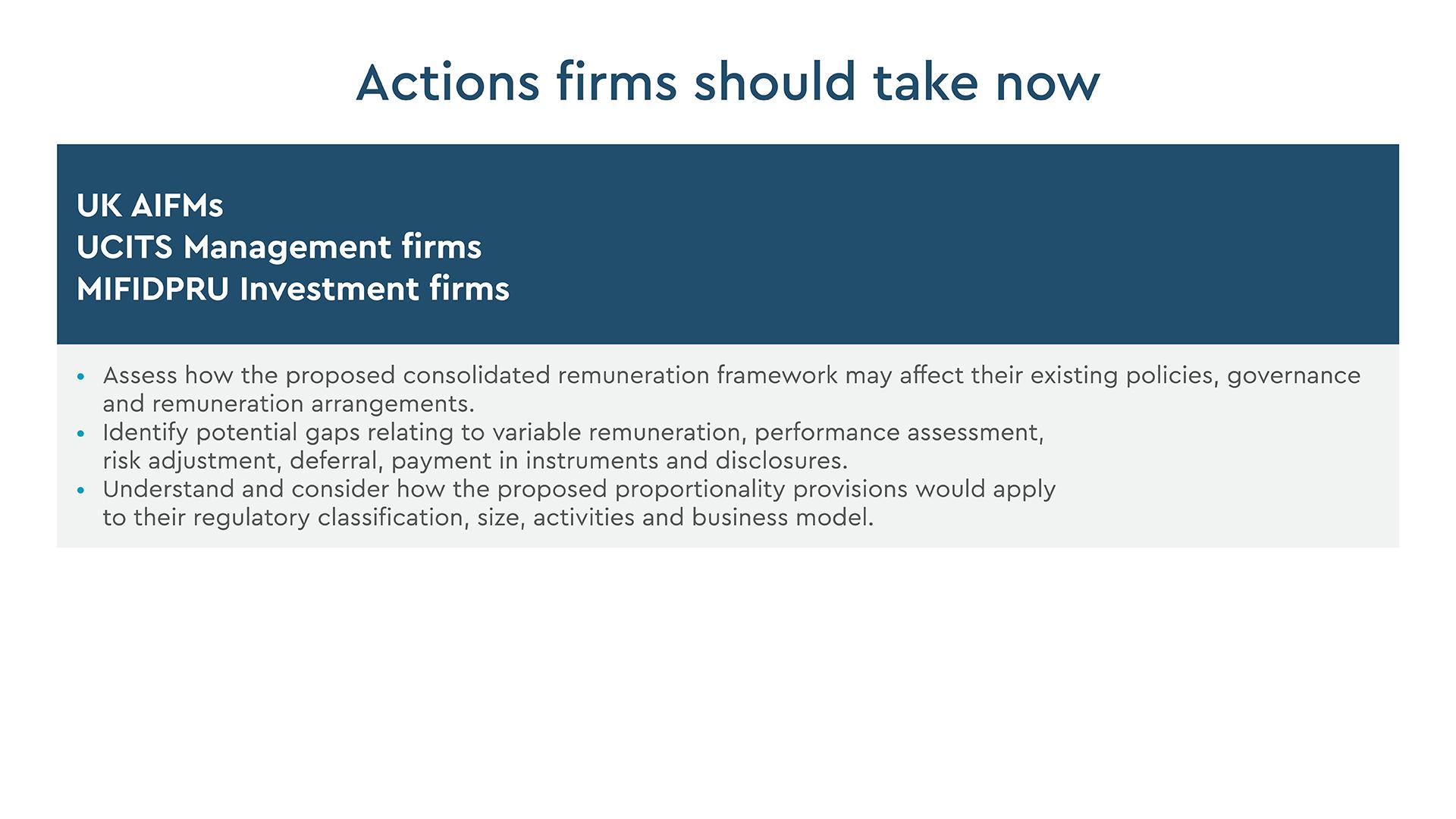
The FCA proposes replacing the existing AIFM, UCITS and MIFIDPRU remuneration codes with a single, more proportionate and outcomes-focused framework for in scope solo regulated firms.
Key areas include:
remuneration governance and accountability;
fixed and variable remuneration;
performance assessment and risk adjustment;
deferral and payment in instruments;
proportionality; and
regulatory disclosures.
The detailed application will depend on each firm’s regulatory status and classification.
Image
UK–EU divergence: What firms should consider
The UK is not implementing AIFMD II. Instead, the FCA is developing a separate domestic framework. For firms operating across the UK and EU, divergence may create additional complexity in areas including:
AIFM categorisation and regulatory scope;
liquidity-management arrangements;
loan-originating funds;
delegation and oversight;
prudential requirements;
remuneration;
investor disclosures; and
fund-level regulatory reporting.
Image
To be confirmed
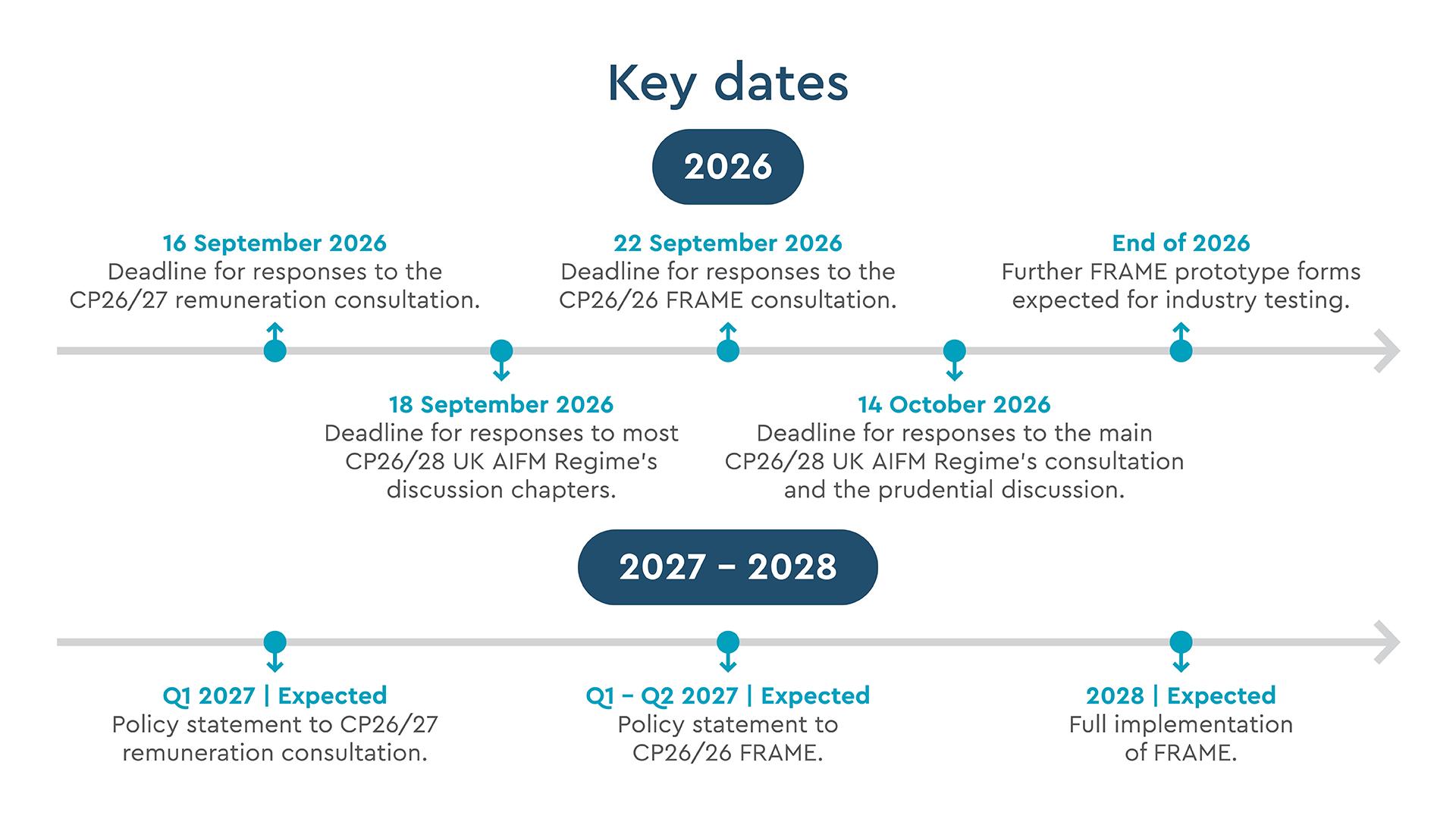
Further FCA consultation is expected on aspects of the future UK AIFM regime that are not fully addressed in CP26/28 The UK AIFM Regime consultation.
The implementation timetable for the wider UK AIFM reforms remains subject to further consultation and confirmation.
How Ocorian can help
At Ocorian we can support firms with:
Regulatory impact and implementation support, including categorisation assessments, gap analysis, implementation roadmaps, UK–EU regulatory divergence reviews and responses to FCA consultations;
Governance and operational framework reviews, covering risk and liquidity management, delegation and outsourcing oversight, operational resources, systems and controls, record keeping and business-continuity arrangements;
Prudential assessments and financial-resilience support, including review of capital, own funds and liquidity adequacy, fixed-overheads requirements, professional-negligence risk and insurance arrangements, stress testing, prudential governance and wind-down planning;
Regulatory reporting and regulatory compliance support, including FCA regulatory reporting health-checks, preparation and submission of Annex IV reports (UK and EU), data collection, calculations and validation, FRAME readiness assessments and data-mapping support; and
Remuneration, UK marketing and ongoing compliance support, including remuneration policy and governance reviews, UK NPPR marketing and material-change notifications, cessation and deregistration of AIFs support, and AIF annual-report applicability assessments and regulatory reviews.
Need a deeper analysis?
Ocorian’s Regulatory Consultants will be publishing in-depth articles on each of the FCA’s consultation papers referenced in this article.
To discuss how the proposals may affect your business, please contact Ocorian’s Regulatory Consultants via Ocorian’s website.
Related Items
View all

